

Little Amélie
everyone should watch this film

SPOILERS BBZ
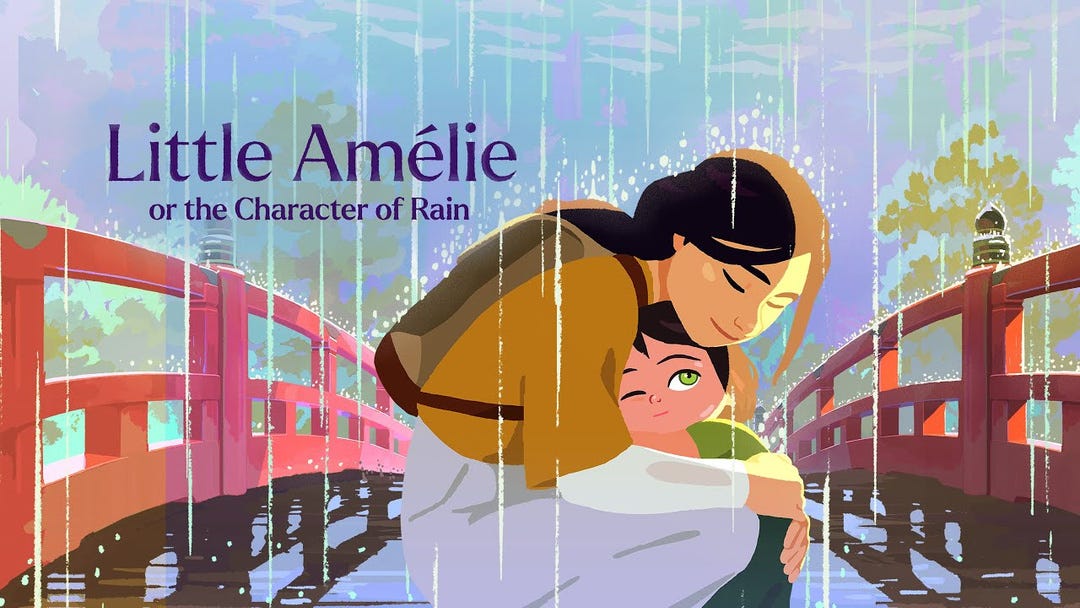

The beauty of life doesn’t last forever but your memories do. And inside those memories, you can revisit that beauty, that joy, that love anytime. However, knowing remembrance awaits doesn’t stop the little grief felt when a joyous experience ends, especially where people are concerned. But it does mean that whether they die or simply move out of your orbit, their existence isn’t erased from your life.
And that impermanence is what makes everything so precious.
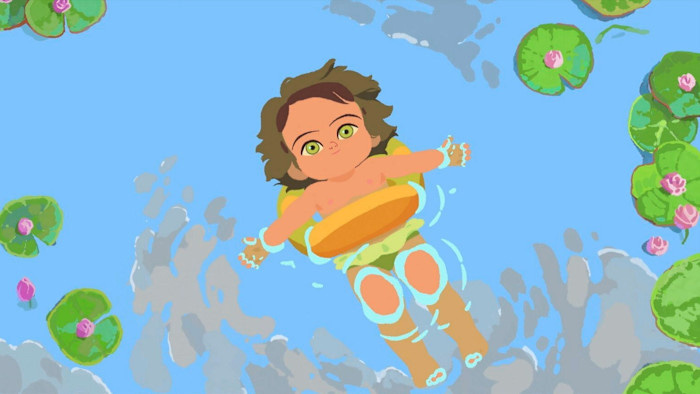
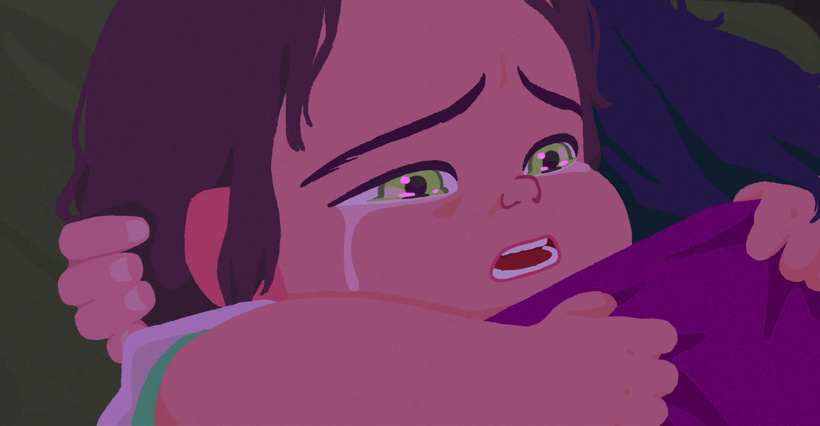
I watched Little Amélie (aka The Character of Rain) this week. The film follows wee Amélie figuring out life as she encounters the world for the first time. Amélie, like most babies, is an observer of the world — a “vegetable,” as the doctor who delivers her labels her. It’s not until an earthquake pierces her vegetative bubble (literally) that she quickly embodies the terrible twos, much to her parents’ delight.
But the real magic begins when Amélie’s c’est magnifique grandmother visits. The fancy older woman lets Amélie bite on a piece of white chocolate and voilà. Amélie has a divine experience that awakens all of her senses and the beginning of her humanity.
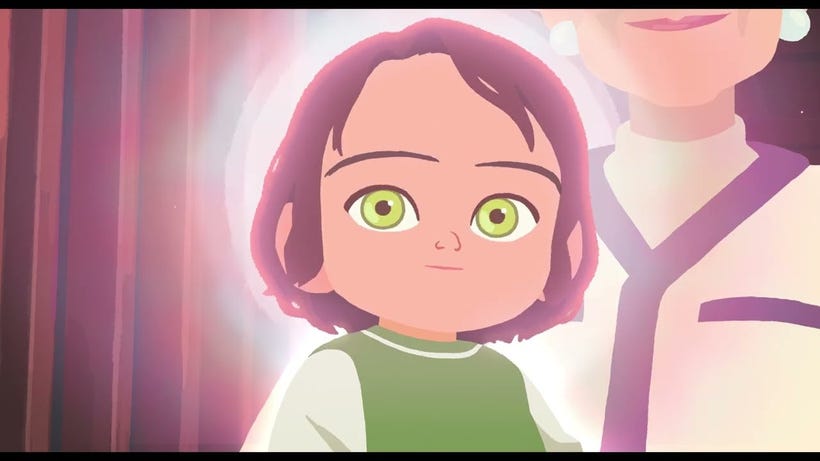
Amélie questions everything around her and we’re allowed to see how she contextualises the world through the surrealism of her imagination intruding on everyday life. However, Amélie feels rather alone until she meets her family’s housekeeper, Nishio-san.
Amélie tries to test Nishio-san by repeatedly dropping the books she is placing on the shelves of the library. Yet Nishio-san doesn’t vibrate with anger or even sigh in annoyance. Instead she smiles and shows Amélie a book about a monster. Through Amélie’s imagination, we watch as the monster tries to pull apart the library doors. Frightened, Amélie shuts her eyes and quickly embraces Nishio-san. The surrealism works wonders in enchanting us with Amélie’s view of the world. Whether terrifying or beautiful, it reminds us that children see the world as it is: full of whimsy and magic.
Nishio-san asks if Amélie would like to assist her in placing books on the shelves and a bond is born. After placing a few books together, Amélie picks up the heavy monster book with all her might. From that moment on, Nishio-san is her safe space.
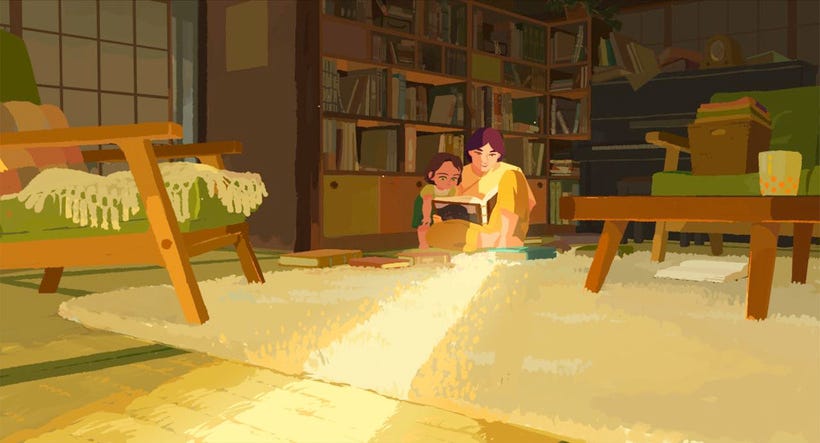
As Amélie tries to understand her place in the world and that of those around her, we see that the adults in her life do not placate her with answers deemed “appropriate” for a child, nor do they pretend to know what they don’t.
When Amélie asks her dad why there’s a “Boy’s day”, why the day’s symbol is a carpe and why isn’t there a “Girl’s day”, he doesn’t pretend to know why. Dad doesn’t force an answer. And it’s refreshing.
I’m unsure if it’s a western phenomenon, but there’s often this prevailing sense that adults must have an answer for everything. To not be in the know is almost shameful, especially when questioned by a child. But there is no ego in this moment, and many others in the film. Later, with Nishio-san, Amélie forms her own answer. She decides the carp are “ugly” and concludes that must be why they symbolise Boy’s Day — because “boys are the uglier gender”. Nishio-san goes along with it.
Through her own observations and learnings thus far, Amélie is able to find an answer and her own justification that makes sense to her. She doesn’t listen and repeat but rather observes and creates.
Amélie asks more poignant questions too. She asks Nishio-san, “Why do people die?” following the death of her grandma. Amélie tells us that she “knew what death meant,” but that doesn’t mean she understood it.
Nishio-san makes a soft attempt to put the conversation to bed by saying “I’m sure you don’t want to hear about that” but Amelie pleads, to which Nishio-san concedes and speaks about her own experience of death - the day she lost her family when the atomic bomb was dropped on Hiroshima.
As she prepares food, her grief is analogised through what she handles. Rice spills across the screen as she describes being buried under rubble. A fish is beheaded as she says the word “death.” We hear the pain in her voice as she recounts the day that left her alone in the world, and we watch as Amélie witnesses Nisho-san’s aching.

It’s a moment of teaching but also catharsis.
And it only happens because Nishio-san doesn’t condescend, and she isn’t ashamed of her suffering, her humanity. She treats Amélie like a person, not subordinate or inferior.
It made me think about the idea of protecting a child’s innocence by pacifying them with non-answers dipped in censorship. Does protecting innocence really just mean manufacturing ignorance? In this scenario, would it have been better to allow Amélie to believe the world isn’t as cruel as it really is?
Even a near-death experience doesn’t stop Amélie from wanting to explore and understand the world around her. The trauma does not harden her. The truth doesn’t extinguish her curiosity. But that resilience is a direct result of the love in her life, from her family and Nishio-san.
Love is security.
The character of Kashima-san serves as a direct contrast to Amélie and Nishio-san; Amélie’s curiosity and excitement for life and Nishio-san’s warmth. Kashima-san is Amélie’s family’s landlady, an older woman who Amélie describes as “severe’’.
It only takes a few dots to connect the source of Kashima-san’s supposed bitterness. The film is set in 1960s Japan. Amélie’s family are Belgian. Amélie’s father is a Belgian diplomat. And then you realise that the hostility Kashima-san’s holds close to her chest is once where the love for her family resided, before shadows of hate were cast over the people who fought against Japan, the people responsible for the family she lost to the war.
In a particularly tense moment where Kashima-san chastises Nishio-san for growing close to Amélie, she shouts about her husband and her son, and how Amélie will forget all about Nishio-san. Kashima-san suffered a catastrophic grief, much like Nishio-san. But grief is not uniform. Losing your family as a child is not the same as losing your husband as a wife, your child as a mother.
And as a result, her love for life stopped, her willingness for connection suspended as grief engulfed her. Her wonder has gone. Through Amélie’s grandmother, we see who Kashima-san could have been. A grandmother who proposes a champagne toast in response to her grandchild uttering “vacuum cleaner” as her first word. A grandmother eager to infiltrate her granddaughter’s rage. A grandmother whose harsh honesty still holds the undercurrent of love and care.

The film ends with Amélie saying she is not God, but that she is human, and that is better.
Little Amélie emphasises the impermanence of life is what makes it beautiful and that humanity is fragile, easily tarnished but just as easily mended through connection and belonging.

If this piece resonated, provided entertainment or added some value to your life, a paid subscription would be the best way to show your support. If this type of commitment is too full on, you can always send me a one-time donation via my buy-me-a-coffee page
I’ve never heard of this but it sounds poignant. 🥰🫶🏻